
Picture a small boy with his knees pulled to his chest, sitting in a basement somewhere he did not choose to be, waiting for the noise to stop.
He did not start this war. He cannot end it. He just has to survive the night and then the next one and hope that is enough.
Now picture a child somewhere else entirely — falling asleep to a bedroom fan, a parent’s voice drifting through a lit doorway, and the ordinary sounds of a world still holding steady. Same age. Same needs. Different coordinates.
That distance between them is not fate. It is a failure.
What war actually destroys
We talk about war in the language of strategy and loss — casualty figures, refugee counts, and infrastructure damage. These numbers matter.
But they smooth over what is hardest to measure: the interior damage, the slow collapse of a child’s sense of safety that never appears in any report.
It is not only buildings that war destroys. It is the invisible architecture of childhood — the quiet assumption that the ground beneath your feet is solid, the unspoken belief that the adults around you have some grip on things.
War replaces those beliefs with a fear so persistent it eventually starts to feel like normal.
And that may be the saddest part of all: when terror becomes the baseline, when a child stops waiting for things to improve because they have simply forgotten that better was ever an option.
The body keeps its own record. Chronic fear rewires the developing brain, reshaping how a person perceives threat, regulates emotion, and trusts another human being.
Those changes do not dissolve when a ceasefire is announced. They travel forward into adulthood, into parenting, into the next generation.
War has a longer half-life than most people want to admit.
The stolen future
A child who should be learning long division is instead memorising which sounds mean “shelter” and which ones mean “run.”
A teenager who wanted to become a doctor is navigating a border crossing with everything she owns in one bag.
Education is not only about opportunity — it is about a child being able to look ahead and see something there. War steals that vision.
Whole generations end up defined more by what they survived than by what they were able to become.
Pope Francis once said that no child in the world should grow up hearing the sound of war. It sounds almost too simple when you read it. Almost obvious.
And yet here we are — Syria, Ukraine, Yemen, Palestine, Gaza, Iran — and the list keeps growing, not shrinking.
Inevitability is not an excuse
Some people say conflict is simply part of human nature — inevitable, encoded in us.
But inevitability has been used to defend a great many things we eventually decided were unacceptable. Child labour. Slavery. Practices we now look back on with genuine disbelief that they were ever permitted at all.
We have changed course before, when enough people decided a particular harm had gone on long enough. Nothing stops us from doing that again except will.
The responsibility to protect children does not live only in government chambers and diplomatic summits. It lives in how we vote, what we fund, which stories we pay attention to and which ones we scroll past without a second thought.
Safe corridors for evacuation, trauma-informed schools, real consequences for bombing hospitals — these are not fantasies.
They exist, imperfectly, in places where people demanded them loudly enough and refused to stop.
Resilience is not enough
The children inside these wars are not only victims.
Many show a kind of strength that stops you cold — making friends across language barriers in refugee camps, drawing pictures of sunshine in damaged notebooks, and enduring conditions that would break most adults without being asked for gratitude or recognition.
That matters, and it is worth saying out loud.
But resilience is not a substitute for safety. We should never need children to be extraordinary just to survive an ordinary week.
Their strength does not release us from responsibility. If anything, it makes that responsibility harder to ignore.
Childhood should be soft. Forgiving. Full of small forgettable moments that become everything when you look back — the smell of rain on hot pavement, a story half-heard before sleep, the pure uncomplicated joy of running somewhere fast for no reason at all.
That is what war takes. Not just buildings. Not just years. That specific softness — the window of time when the world is supposed to feel safe enough to simply be a child in.
We keep letting it happen.
That part is on us.
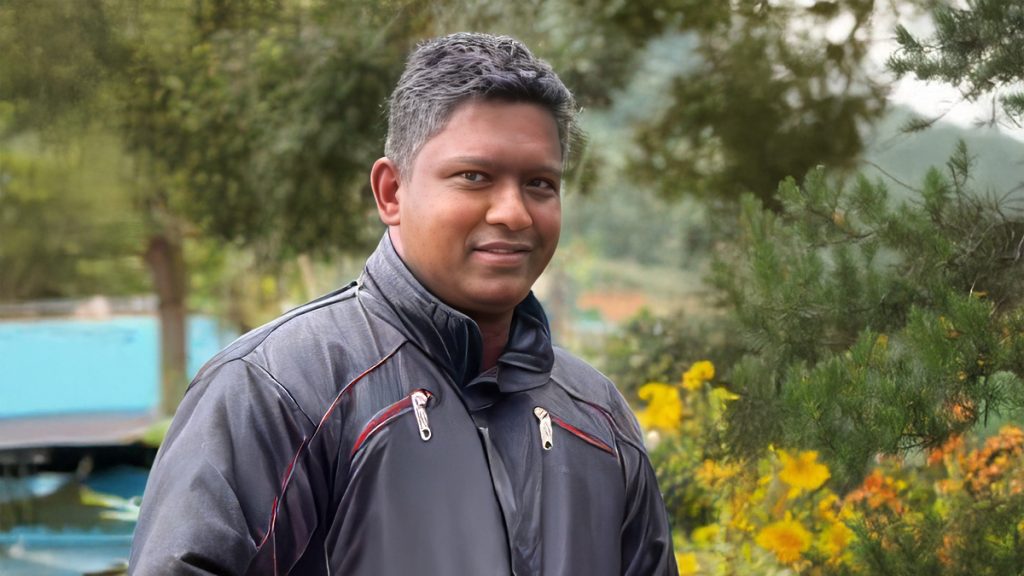
- John Singarayar SVD holds a doctorate in Anthropology. He is an author of several books and regularly contributes to academic conferences and publications focusing on sociology, anthropology, tribal studies, spirituality, and mission.