

The term Cafeteria Catholics, sometimes called buffet or a la carte, is a derisory term once used by conservatives against those Catholics who dissent from some aspects of church teaching.
Less frequently used now, it probably dates from about 1968 to the negative reaction to Humanae Vitae, the papal encyclical which condemned artificial birth control or contraception.
That was a great turning point for modern Catholicism, ushering in widespread demands for freedom of conscience, and was a forerunner to the church reform movement.
So-called Cafeteria Catholicism became widespread, including dissent from official church teaching on reproductive and gender issues, including divorce and remarriage, the ordination of women and married men, same sex marriage and gay rights, and in some cases abortion and euthanasia (VAD).
Words and who uses them
Terminology is important. Cafeteria Catholics have not left the church. They are exercising their conscientious rights.
In some cases, they are part of the active church reform movement trying to renew the church. But a majority are quietly living their lives in parishes and religious communities.
Surveys reveal that dissenters from official doctrine are widespread, often in a majority.
Those Catholics who have actively or passively left the church are usually described, with derision or just as a statement of fact, as Cultural Catholics.
Sometimes their non-participation is absolute, spurred on by the child sexual abuse crisis, but others participate in church ceremonies during Christmas and Easter and in family sacramental occasions.
In Australia, they may identify as Catholics for government-funding purposes and are hence known sometimes as Census Catholics. The official church encourages such identification for pragmatic financial reasons.
A label that changed sides
Since the time of Pope Francis, the term has been turned on its head. Church teaching has been challenged by leading conservatives to the point of rupture.
The anti-Francis movement became the Cafeteria Catholics, rather than progressive reformers. Both doctrine and practice were disputed within the West, and the global south has dissented from papal pronouncements on issues like blessings for LGBTQIA+ Catholics, and those in so-called ‘irregular relationships’, including divorced and remarried Catholics.
The flash point now is the meaning and application of the process of synodality. Pope Leo has reiterated that the program which emerged from the Synod on Synodality has been adopted in full.
In practice, the weakness of synodality is that its implementation by dioceses can be delayed and/or its elements cherry-picked. Once delaying tactics have been exhausted, synodality can be interpreted in various ways. Ultimately it can be resisted and dismissed.
When the bishop picks and chooses
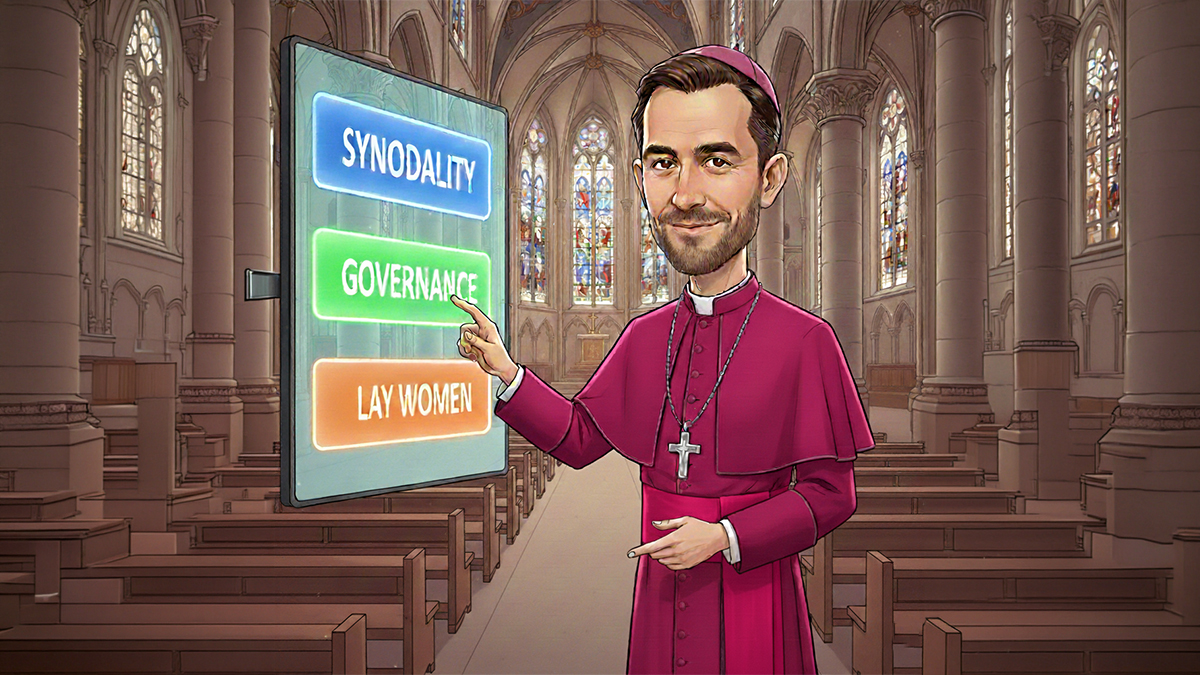
One such element is governance reform.
In my own archdiocese of Canberra-Goulburn, the archbishop has publicly stated that synodality is not about governance. Yet the Synod on Synodality made clear that it certainly is.
He has a particular dislike for the introduction of a Diocesan Pastoral Council. According to his confidantes, he is resolute that it will not happen on his watch.
Such intransigence occurs around the world, though half-hearted box-ticking is probably more common.
Faced with a Cafeteria Bishop who picks and chooses from official church practices according to his personal preference the options for ordinary Catholics are limited.

- John Warhurst is an Emeritus Professor of Political Science at the Australian National University in Canberra and a director of the Council of Australasian Catholics (formerly the Australasian Catholic Coalition for Church Reform).