
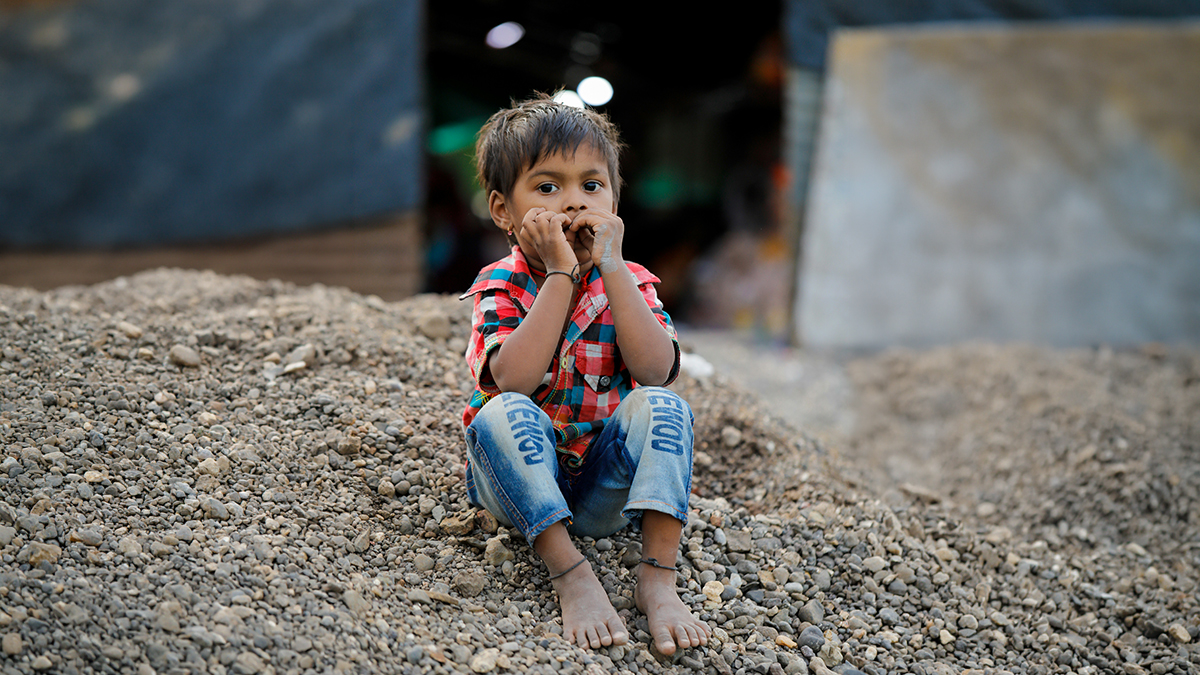
UNICEF estimates 473 million children live in unrelenting violence.
As a pediatrician, I know deeply the devastating toll war takes on children’s bodies and minds. The faces of conflict — families torn apart, the elderly displaced, the poor and marginalized abandoned — demand hard questions about how people of faith respond.
Traditional war principles
Over centuries, the Church developed guiding principles for “just war,” rooted in the teachings of St. Augustine and St. Thomas Aquinas:
Peace is the desired end and goal of war. Legitimate authority should determine grave danger. All peaceful efforts have failed.
The destruction and suffering must be proportional to the good to be achieved. Combatants must discriminate between soldiers and civilians and never directly target innocent people.
Gospel of nonviolence
The Old Testament is replete with wars and retribution. In stark contrast, Jesus’ greeting on Easter evening to the terrified and discouraged apostles was “Peace be with you” (Jn. 20:19).
He rejected the culture of war, telling Peter to put away his sword. He challenged systems of violence and transformed enemies into friends.
Terrence Rynne, a Marquette University professor, declared at the October 2025 Rome seminar of Pax Christi International’s Catholic Nonviolence Initiative: “Just war has no scriptural foundation.”
Modern technological destruction
The unprecedented destructive power of nuclear weapons, bombs, land mines, missiles and drones has forced a re-evaluation of “just war.”
They erase moral responsibility — with the push of a button, millions who are never seen can die across the globe. Artificial intelligence-driven autonomous weaponry is now described as “small, cheap and abundant.”
Responding to these terrifying “signs of the times,” the Second Vatican Council called for war to be banned. Pope John XXIII’s Pacem in Terris called for “integral disarmament,” achievable only through conversion of heart and mind.
In Fratelli Tutti, Pope Francis concluded: “It is very difficult nowadays to invoke the rational criteria elaborated in earlier centuries to speak of the possibility of a ‘just war.’ Never again war!” This marks a key doctrinal shift away from tradition toward a Gospel-based ethic of nonviolence.
On World Peace Day, Jan. 1, 2026, Pope Leo called for “the peace of the risen Christ … unarmed and disarming peace, humble and persevering.”
He condemned “the irrationality of relations between nations built, not on law, justice and trust, but on fear, domination and force,” as global military spending has surged to $2.718 trillion — paradoxically increasing fear.
Building institutional peace
U.N. Secretary-General Guterres warns of the organization’s “imminent financial collapse.”
With the expiration of the New START treaty between the U.S. and Russia limiting possession and use of nuclear weapons, Pope Leo XIV declared on Feb. 4, 2026: “It is more urgent than ever to substitute the logic of fear and distrust with a shared ethos capable of guiding choices toward the common good and to make peace a treasure to be cherished by all.”
May the peace Christ grants us give us perseverance in its pursuit, here and now.

- Nuala Kenny is a Sister of Charity in Halifax, Nova Scotia, and a pediatrician. An officer of the Order of Canada since 1999, she has published several books, including Healing the Church (Novalis, 2012) and Rediscovering the Art of Dying (2017). She is co-author of Still Unhealed: Treating the Pathology in the Clergy Sexual Abuse Crisis (Novalis and Twenty-Third Publications, 2019). She most recently published A Post-Pandemic Church: Prophetic Possibilities (Novalis and Twenty-Third Publications, 2021).