

Pope Leo, some bishops, and a handful of other highly committed people keep talking about synodality.
They issue documents – read by few; give speeches – not many listen to the details; and hold seminars attended by the same handful who read the documents, and hope that something will happen to fulfil the vision of the Second Vatican Council from more than 60 years ago!
For most Catholics, synodality means nothing.
After years of it being the buzzword, nothing has changed.
Not an enthusiast
When I point this out, many Catholics immediately suspect me of being one of those who are surreptitiously critical of Vatican II or, else, part of the group that would just like to forget Pope Francis and return to a two-tier church: clergy leaders (the ‘officer corps’) and a laity who pay, obey, and pray (the ‘other ranks’).
But nothing could be further from the truth.
Synodality is not a theory, but a way of acting.
If it is not making basic changes in the way we do things, it is not happening.
A village near Patras
There is a little village just southeast of Patras in Greece where, about 80 years ago, the priest died.
Nothing unusual in that, and there are many small mountain villages east and south of the city.
But this priest had no son, and so there was no obvious person to become the new village presbyter.
The community met and chose one of the village’s men as the person most suitable to be their parish’s presbyter.
The chosen man agreed to take on the task, so the community contacted the bishop, and, in due course, the man was ordained.
His ministry was a long, happy, and fruitful one – he served his own community for the rest of his life, raised his family, and prayed that his grandson would also be ordained.
And, just before he died, the old priest got his wish.
But nothing ever works out perfectly, so his grandson does not serve the village but has followed an academic vocation and teaches theology.
In this story, we see the fundamental pattern of ministry.
Ministry is service from within a community.
It is a church built from the bottom up.
Spotting synodality
When I hear about a Roman Catholic community, which should be much smaller than one of our present parishes, without a presbyter coming together and selecting someone to preside at their Eucharist, then going to the bishop.
And then the bishop listens to them and ordains that man, because no community should be without one of its members to lead their Eucharist, then I shall know that synodality has arrived in a local church.
But until I hear of a bishop fulfilling his basic job – ordaining leaders of eucharistic celebrations from local communities – I shall treat talk about ‘synodality’ (even coming from Pope Leo) as just words.
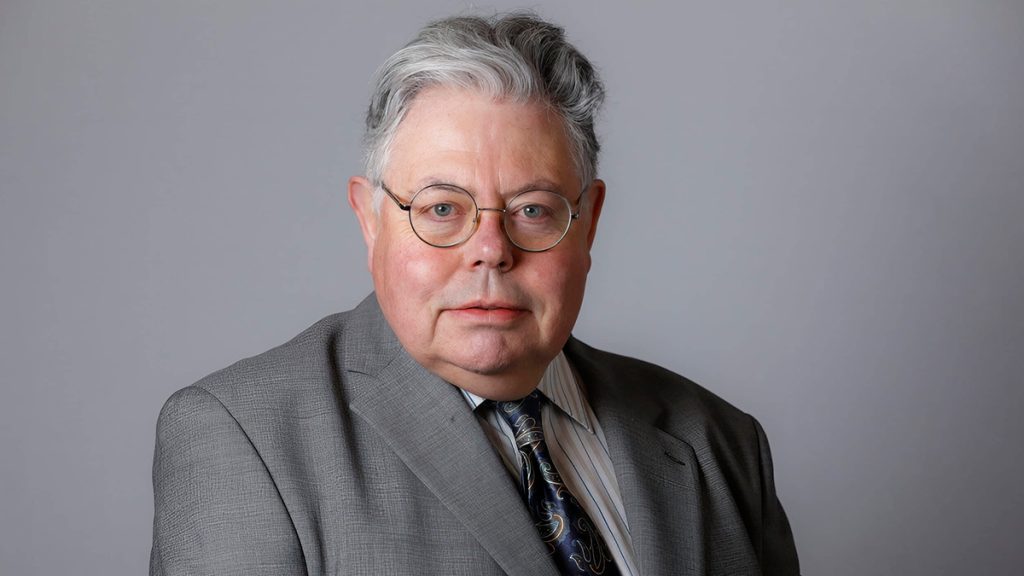
- Thomas O’Loughlin is a presbyter of the Catholic Diocese of Arundel and Brighton and professor-emeritus of historical theology at the University of Nottingham (UK). His latest book is Discipleship and Society in the Early Churches.
- His latest book is “Shaping the Assembly: How Our Buildings form us in Worship“.