

Contemporary tensions between U.S. political authority—seen in figures like Donald Trump—and ecclesial authority, symbolised here by Pope Leo XIV, point to deeper structural instability. These tensions are not just personal conflicts. Instead, they raise core questions about authority, legitimacy, and tradition in a fragmented public sphere.
At the centre of this analysis is a key question: What counts as legitimate authority when both political and religious actors claim normative influence? The conflict between political leadership and ecclesial critique shows a classic tension. State sovereignty stands against moral universality. Political authority works within institutional and constitutional bounds. Still, it often invokes moral ideas that reach beyond these limits, especially about war and, more recently, immigration and immigrant rights. On the other hand, ecclesial authority holds a moral vision that claims to transcend history, but it must speak within specific political realities. The resulting friction is structural, not just a matter of chance.
This dynamic mirrors broader patterns in theological discourse. Appeals to “authentic tradition,” in ecclesial or political contexts, often stabilise situations during perceived crises. Yet such appeals raise questions: is tradition fixed or developing? Simplifying complex history and doctrine into univocal claims risks obscuring the plurality in tradition. As seen in debates about John Henry Newman, continuity should be dynamic—more organic development than static repetition. When political or religious actors invoke tradition while ignoring this complexity, authority becomes rhetorical rather than analytical.
The way a crisis is framed matters. Political and theological arguments often start by claiming a breakdown, whether in doctrine, morality, or social cohesion. This brings up a question: Is the crisis real and measurable, or just a rhetorical tool? In current U.S. politics, we see clear polarisation and factionalism. But interpretations of these issues differ widely. Presenting diversity as “confusion” suggests an already chosen viewpoint, one that may exclude other perspectives. As a result, crisis talk is used to justify corrective actions in both politics and theology.
We can understand these developments in a broader historical context by drawing on the work of John Bagot Glubb. In The Fate of Empires, Glubb says empires go through cycles shaped more by internal shifts than outside threats. Growth and affluence lead to periods of intellectualism, decadence, and then fragmentation. Today’s clashes between political and religious authorities may be signs of a late-stage empire. This raises another question. Does current political division show that democracy is alive, or does it show civilizational fatigue?
Glubb’s work draws attention to inner moral and cultural forces. In late-stage empires, civic virtue often declines and individualism rises. In such times, appeals to religion can be unclear in purpose. Sometimes religion is a real moral critique. Other times, it is used as a tool in political strategies. This is a key question for political theology and for all Christians and people of goodwill. Is religion correcting political failure, or is it being used as a resource in power struggles? The answer is not the same in all cases. Historically, religion has played both roles.
The broader geopolitical context intensifies these questions. Shifting global power structures and the erosion of established institutions contribute to a sense of instability. Domestic conflicts within leading powers such as the United States cannot be isolated from these developments. Rather, they reflect a reconfiguration of global order in which traditional sources of authority—political, religious, and cultural—are increasingly contested.
In conclusion, the apparent conflict between political leadership and ecclesial authority should be understood not as an isolated dispute, but as a manifestation of deeper structural tensions. These include the fragmentation of moral consensus, the contested nature of tradition, and the potential dynamics of imperial decline. The critical task is therefore not merely to adjudicate between competing claims, but to examine the conditions under which such claims arise. In this sense, the present moment demands a careful integration of political analysis, theological reflection, and historical awareness.
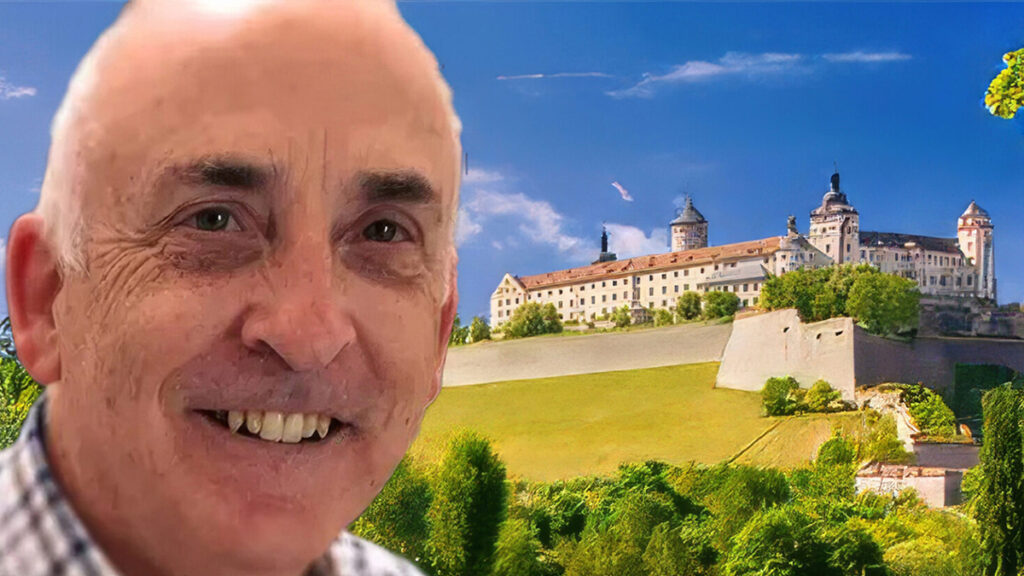
- Dr Joe Grayland, a priest of the Catholic Diocese of Palmerston North, New Zealand, is an assistant lecturer in the Department of Liturgy at the University of Wuerzburg (Germany).