
Religion becomes pathological when it severs itself from reason—sliding into arbitrariness, fanaticism, and irrationality. In doing so, it does not merely distort faith; it endangers the peace of society itself. This now appears less theoretical and more central in USA politics.
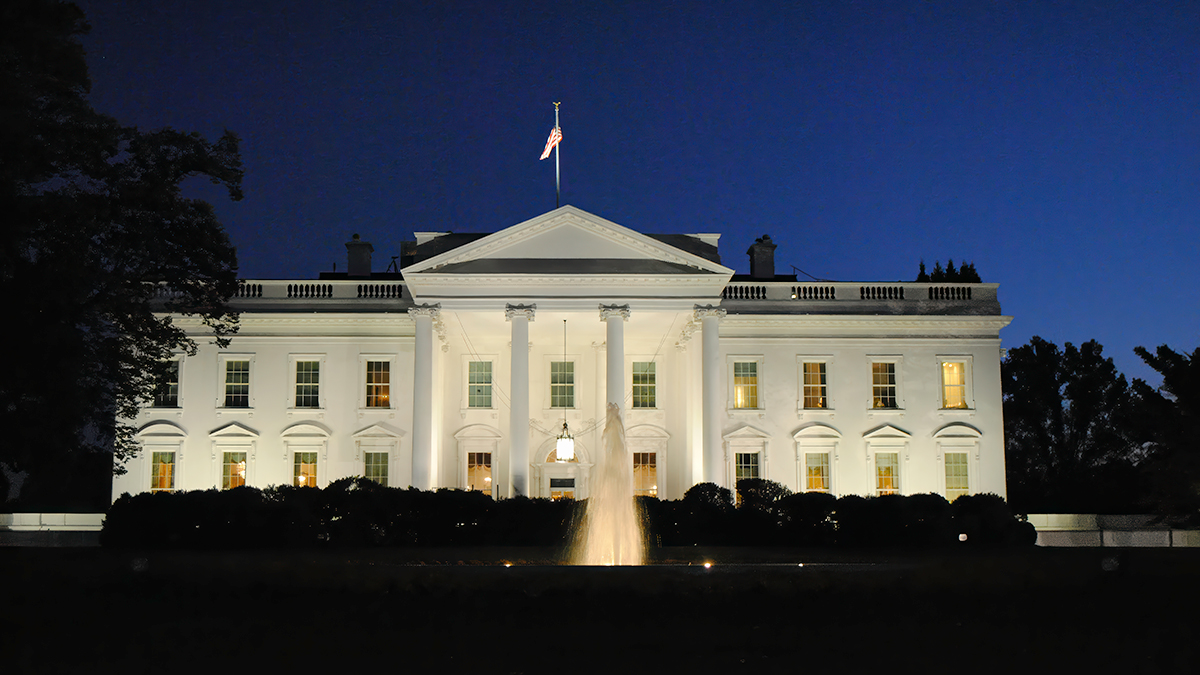
A stark instance emerged recently in the White House. What should have been an Easter reception—nominally grounded in Christian symbolism—mutated into a political liturgy that deified Donald Trump. His “court-approved” preachers recast his biography by usurping biblical motifs, culminating in comparisons to Christ’s Passion and triumph over death.
The inversion is theologically precise: a political figure, marked by sustained assaults on human dignity, democratic norms, and truth itself, is reframed as divinely appointed. Is the Johannine warning—“the father of lies” (John 8:44)—the hermeneutical key by which to understand the United States government? A government that people used to joke was “the best democracy money could buy”. Now, is it the best despotism money and religious nationalism can assemble, beside that of Israel, Iran and Russia? What emerges is not civil religion but its degeneration: a blasphemous parody of Holy Week, as Massimo Faggioli aptly observed.
Religion as Nationalist Instrument: A Structural Risk
The broader United States pathology is religious nationalism. This is symbolised in the Catholic Church, where they place their national flag in the sanctuary, because nationalism trumps baptismal belonging. When religion is subsumed into nationalist ideology, it ceases to function as a critical, transcendent norm and instead becomes an instrument of legitimation. The danger is not merely internal corruption of belief but external harm—religion weaponised to sanctify power, distort moral judgment, and normalise violence or exclusion.
At the centre of this ideological theatre stood Bisho Robert Barron, functioning—however unintentionally—as a Catholic veneer for a movement increasingly detached from ecclesial and moral coherence. Does his public recognition align him with a political figure whose rhetoric and praxis ignite precisely the forms of disorder that Benedict warned against? How untrustworthy has he become as both a bishop and a witness to Christ?
A Personal Theological Reversal
There is an irony that borders on indictment. In earlier liturgical debates, omitting the embolism in the Lord’s Prayer—“Deliver us, Lord, from every evil…”—was seen as progressive, ecumenically sensitive. Its retention, however, preserved an anthropological realism: “and keep us from confusion and sin.”
Today, that warning appears understated. The scale of confusion now exceeds prior anxieties. More striking still is the inversion of roles: those who once claimed the mantle of “conservatism” now appear as actors against the intentions of the papal magisterium and as justifiers of evil.
Critical question for the English-speaking church
This raises a necessary and uncomfortable question: Must the English-speaking Churches consciously distance themselves from the “Americanism” understanding of Catholicism and avoid absorption into political mythologies, nationalist identity, and charismatic authority?
If this diagnosis holds, then the issue is not cultural variation but theological integrity. A Church that permits its symbols, narratives, and leaders to be co-opted by political power ceases to be a sacrament of unity and instead becomes a vector of division.
Where a pathology is liturgically enacted, politically amplified, and theologically rationalised, the only adequate response is not rhetorical distance, but structural and intellectual resistance grounded in reason, tradition, and a renewed account of truth.
- Dr Joe Grayland, a priest of the Catholic Diocese of Palmerston North, New Zealand, is an assistant lecturer in the Department of Liturgy at the University of Wuerzburg (Germany).