
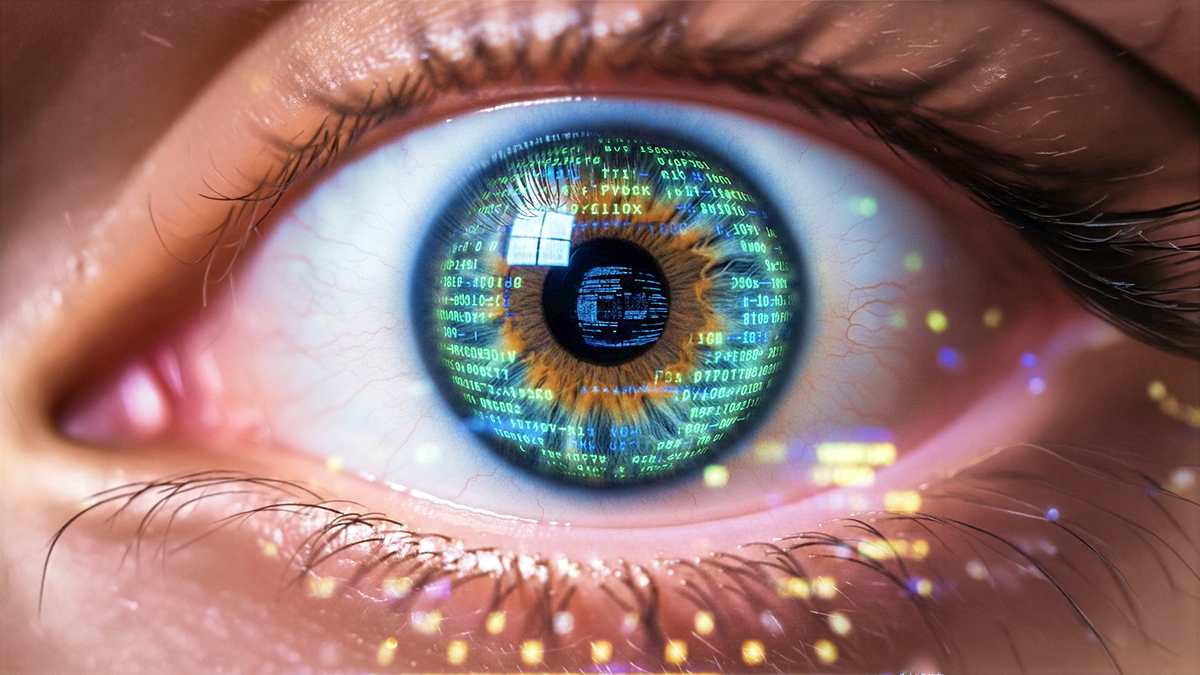
The annual Pope’s Messages for World Communications Day are always worth reading. They go behind the ebb and flow of reporting on current issues to reflect on what lies beneath it and what needs to be addressed.
This year’s message is no exception. It focuses on the nature and effects on communication of the development of Artificial Intelligence.
This approach is timely. The public conversation about AI can be overwhelming because it touches so many areas of life – politics, the creative arts, warfare, employment, education and the economy, to name a few.
We can easily be overwhelmed by the technical detail and led to despair or become disengaged. To resist this temptation, we need to seek coherent principles that govern the application of AI.
Humanity above technology
Pope Leo’s message, which is denser than those of his predecessor, provides those principles. Although grounded in Christian faith in a God who created and entered our human world, it will be of interest to any readers who place a high value on all human beings and on the claims that their humanity makes on us.
It focuses on the role and limits of AI in communication, but its central argument is relevant also to other areas of human life. It advocates for a view of humanity that is high and relational.
It appeals to the uniqueness and expressiveness of each human face and voice as a sign of the value and unique contribution of each person to humanity. Together, the voice and the face represent that value and calling, and the consequent central importance of reliable and deep communication in shaping a human world.
This message argues against a view that sees human beings and their future as defined by technology. It views digital intelligence, like other tools, as a gift to humanity.
The seductive charm of AI is that it can simulate voices and faces without respecting the wisdom and knowledge, consciousness and responsibility, empathy and friendship that are central to a fully human life and to all its relationships.
To use AI well, we must think deeply about what it is to be human. AI, however, can erode human communication through the role of algorithms in sorting and slanting information, by simulating concern, friendship and sympathy, by disregarding questions of value in its use, and by producing works of art, literature and music without the human complexity and searching that are integral to art.
‘The question at heart,
is not what machines can or will be able to do,
but what we can and will be able to achieve,
by growing in humanity and knowledge
through the wise use
of the powerful tools at our service’.
The core of the message lies in its insistence on the distinction between persons and the tools we use:
“The question at heart, however, is not what machines can or will be able to do, but what we can and will be able to achieve, by growing in humanity and knowledge through the wise use of the powerful tools at our service.”
Three threats to communication
The message names three points at which AI threatens the depth of human communication. The first is the uncertainty it sows about whether we are encountering machines or people.
The second is the way in which algorithms confine our attention to people and ideas that mirror ourselves. The third is the bias created by designers and engineers whose own prejudices and ignorance shape what we see and think.
In these ways, the faces and voices we encounter are curated, not real.
The choice posed to us by AI in communication is whether to reduce the human voice and face to the product of technology, or to welcome and use AI in a way that enhances our shared humanity. The choice to do the latter will require responsibility, cooperation and education.
It calls for responsibility on the part of owners of AI firms to seek the common good and not simply profit; on the part of governments and authorities to regulate in ways that respect human dignity; and on the part of media companies to prioritise truth over clickbait and profit.
It also requires cooperation across all sectors of society to recognise the misuse of AI technology and to ensure its respectful use. Finally, it requires education to understand how the technology works, its capacity to enlarge or mislead, and to recognise the distance between the machined face of technology and the real face of human beings.
Clear distinctions matter
Pope Leo’s Message is helpful because it distinguishes clearly between human persons and the tools they use, and between reality and simulation. These distinctions are at the heart of its judgment of AI and its recommendations for its proper use.
They also ground the confidence with which it applauds the gains for humanity that can come through AI technology, and the clarity with which it criticises its misuse. For all its many warnings, the document is positive in its analysis.
Will this message make a difference? In its own terms, it will: all contributions to conversation about value and the human condition are significant.
It enacts recognition of the difference between reality and simulation, and the importance of human discourse, and the distinction between the value of persons and their tools. That this is done makes a difference, regardless of its apparent effectiveness.
That tribute, however, leaves open the question of whether the crucial distinctions between persons and tools, and between reality and its simulations, will be accepted and implemented in our society, at least in the short term. This will require an educational program that both affirms the high value of each human being, distinguishes between persons and their tools, and commits people to this vision.
To do this in the face of the rapid expansion of AI in communication, the attraction of make-believe over sober reality, and the financial and political power of those whose interests lie in a reductive view of human life, will be difficult.
The challenge ahead
The challenge will be multiplied by the economic and political power that very large corporations in societies suffering from gross inequality possess to shape public responses to the development of AI and other technologies.
In a cultural climate that emphasises the primacy of individual freedom of choice in shaping one’s life, any appeal to the claims of a communally shared humanity will face opposition both from those enriched and those impoverished by inequality.
The enriched will see such a view as resisting the inevitability of technological change and the evolution of humanity beyond the personal to the instrumental. Those whose lives are precarious and who see themselves used as tools by society will be resentful and will also resist appeals to the common good.
The smart money will be on the dehumanising growth of AI.
The unpopularity of the cause, however, only makes it all the more important to heed and endorse it.
- Andrew Hamilton SJ is the consulting editor of Eureka Street and a writer at Jesuit Social Services. Republished with permission. First published in Eureka Street.