

Bishop Johan Bonny of Antwerp has thrown a liturgical and canonical grenade into the sanctuary.
By announcing his intent to ordain married men — viri probati — by 2028, he isn’t just asking for a conversation. He is setting a deadline.
For a Church that usually measures time in centuries, four years is a lightning strike.
Reality over excuses
The “why” is as blunt as the “when.”
Bonny points to a vocation rate in Belgium that has hit almost zero. He is tired of the traditional workarounds that have kept the European Church on life support.
Relying on imported clergy from other continents is, in his view, a form of pastoral colonialism — a refusal to look in the mirror and acknowledge that the current model of priesthood is no longer sustainable in the secularised West.
For Bonny, the crisis of empty seminaries is not a sign that God has stopped calling men to service. It is evidence that mandatory celibacy is the bottleneck.
He argues that the Church’s missionary future depends on including men who are already proven in their faith and embedded in their communities, regardless of their marital status.
In doing so, Bonny is leveraging the Church’s own language of synodality to defend his initiative. If the Church is genuinely a listening Church, he argues, it must listen to the silence of empty confessionals and shuttered parishes.
He is forcing a choice: follow the letter of the law into institutional extinction, or embrace a local solution Rome has yet to authorise.
The debate has precedent at the highest level.
Pope Francis shifted noticeably on the question during his papacy, moving from a 2019 statement opposing optional celibacy to acknowledging in 2023 that it was a provisional discipline, not essential to ordination, and one observed mostly in the Western church.
The Vatican under Pope Leo XIV has yet to comment publicly, Reuters reported.
Beyond the altar
Bonny’s 11-page pastoral letter doesn’t stop at married men. He challenges what he calls the “theologically weak” arguments against women in ministry and calls for lay leadership to take the reins of parishes.
He views the categorical ban on women’s ordination not as divine decree but as a position that is anthropologically outdated — one that relies on circular reasoning rather than historical or spiritual necessity.
The double standard
The sharpest insight in Bonny’s intervention is not the deadline itself, but what it exposes.
The Church already ordains married priests — Eastern Catholic clergy and former Protestant ministers who converted to Catholicism.
They serve in Western parishes today.
If married men can already preside at the Eucharist, the theological barrier has already fallen. What remains is administrative, not sacred.
By setting a 2028 date, Bonny is not asking Rome to cross a theological rubicon. He is pointing out that Rome crossed it long ago — and simply hasn’t admitted it yet.
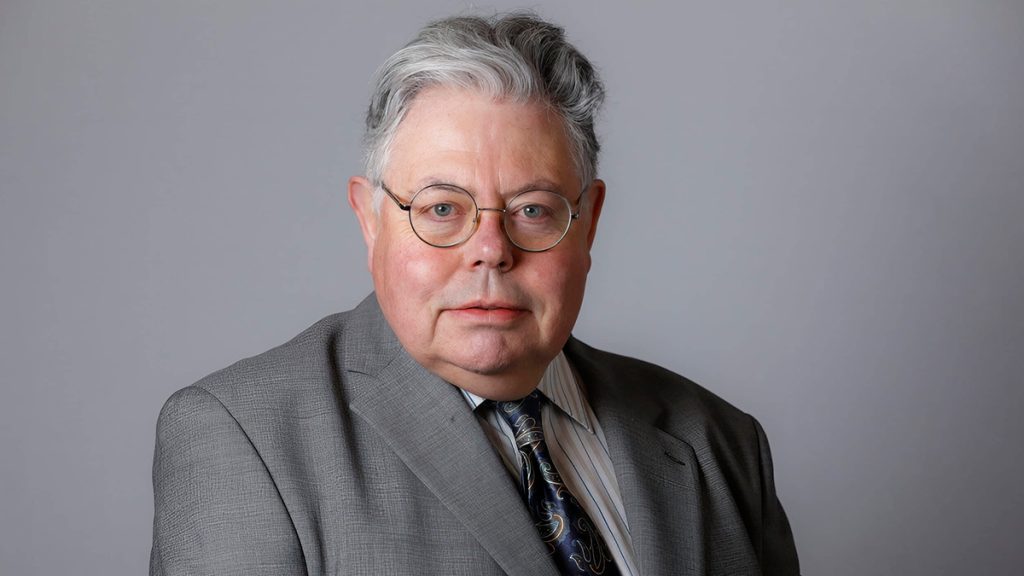
- Thomas O’Loughlin is a presbyter of the Catholic Diocese of Arundel and Brighton and professor emeritus of historical theology at the University of Nottingham (UK). His latest book is Discipleship and Society in the Early Churches.
- His latest book is “Shaping the Assembly: How Our Buildings form us in Worship”.