
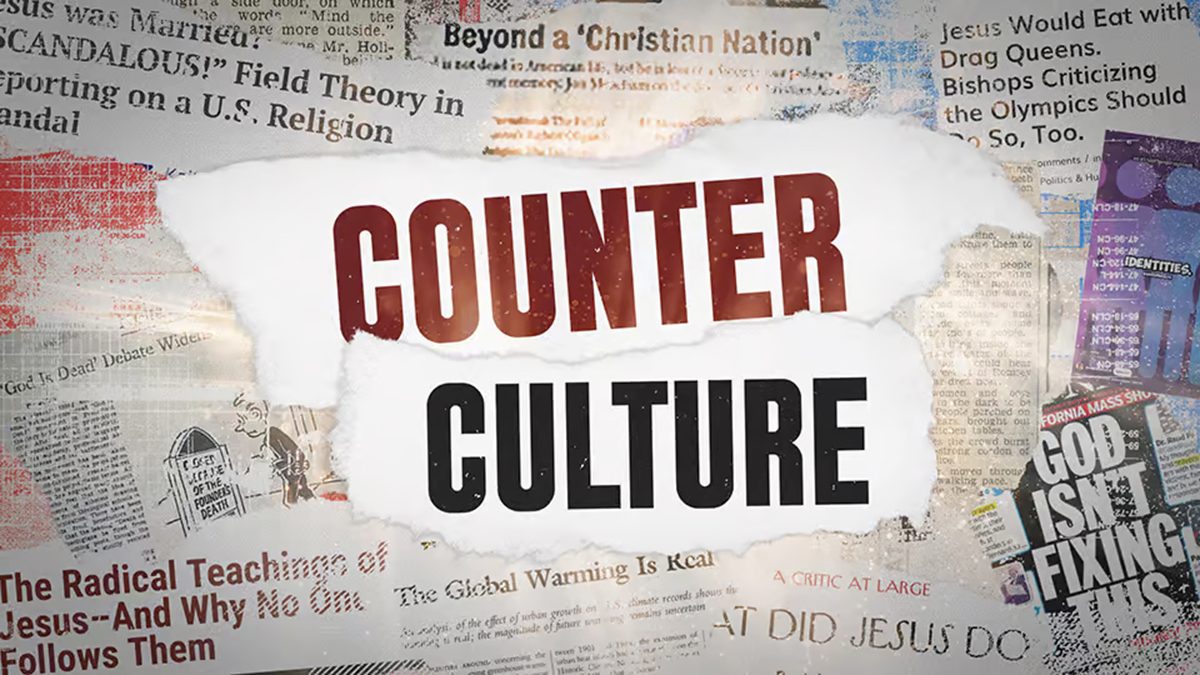

The experience of reflecting on the failures of the church to “call out” the evils of the Nazis gave rise to the notion that witnessing to the gospel may involve Christians in being counter-cultural.
Living in a world where we have a background of silence about places like Auschwitz does not exactly make us credible witnesses to the new vision of life we are called by baptism to proclaim.
We have discovered “the cost of discipleship” – to use Bonhoeffer’s phrase – and have too often being unwilling to pay.

Defining the counter cultural
But what is counter-cultural? When we know that a culture has become one where un-necessary suffering is tolerated, human rights are oppression, falsehoods and crooked myths such as nationalism are peddled, and there is an acceptance of violence – then counter-cultural activity is called for.
But it could be that it is just a case that we do not like some of the developments in society or feel we are being ignored – and in the face of this we are going to be awkward.
Avoid simple cultural awkwardness
Cultural awkwardness is not the same as counter culturalism. It is easy to draw up a list of what we do not like, identify it as the enemy of Christianity, and then dig our heels in.
Let’s face it, religion is a conservative factor in human activity and it does not surprise pollsters that there is an overlap between “religious practice” and a right-wing politics.
If you doubt this, there is no shortage of right-wing populist demagogues who proclaim their defence of “religious values” to harness their powerbase.

Identifying true gospel values
There are many religious people, fond of “the good old days” who, for example, do not like the women’s movement, the open presence of gay people, or the pursuit of human rights by minorities such as immigrants.
It is all too easy to be “counter cultural” and gets lots of attention as a “religious person” by attaching such people – but it might be harder to square that awkwardness with “when I was sick and in prison you visited me” (Mt 25:39).
A test for believers
If you are going to use the counter-cultural approach, then you have to be sure that it is really the gospel and not one’s narrow hang-ups that is driving you forward. A simple test is: who will benefit from my action?
If it is a power group – a group that praises power – or a politician, then be wary.
If the benefit is to those with little voice, those suffering injustices, or the poor – then the odds are better that you are being counter-cultural rather than being culturally awkward.

- Thomas O’Loughlin is a presbyter of the Catholic Diocese of Arundel and Brighton and professor-emeritus of historical theology at the University of Nottingham (UK). His latest book is Discipleship and Society in the Early Churches.
- His latest book is “Shaping the Assembly: How Our Buildings form us in Worship”.