

When politicians and wealthy businessmen meet, we usually expect speeches that soar heavenward like lead balloons. It was therefore an unexpected delight to read the speech of Canadian Prime Minister Mark Carney at the Davos World Economic Forum.
It is direct, concrete, simple and elegantly written, and punctures the lazy generalisations and self-interest we might have expected.
It also offers a diagnosis of current international relations and a way of proceeding that are both persuasive and alarming.
Carney argues that the long-standing international order relating to commerce, military action and law has long been selectively and hypocritically applied and is now dead.
It has been fatally weakened by self-interest and crises in health, finance, energy, climate and geopolitics.
It is now clear that the most powerful nations have shaped, and will continue to shape, bilateral dealings with weaker nations to serve their own interests.
Middle powers unite
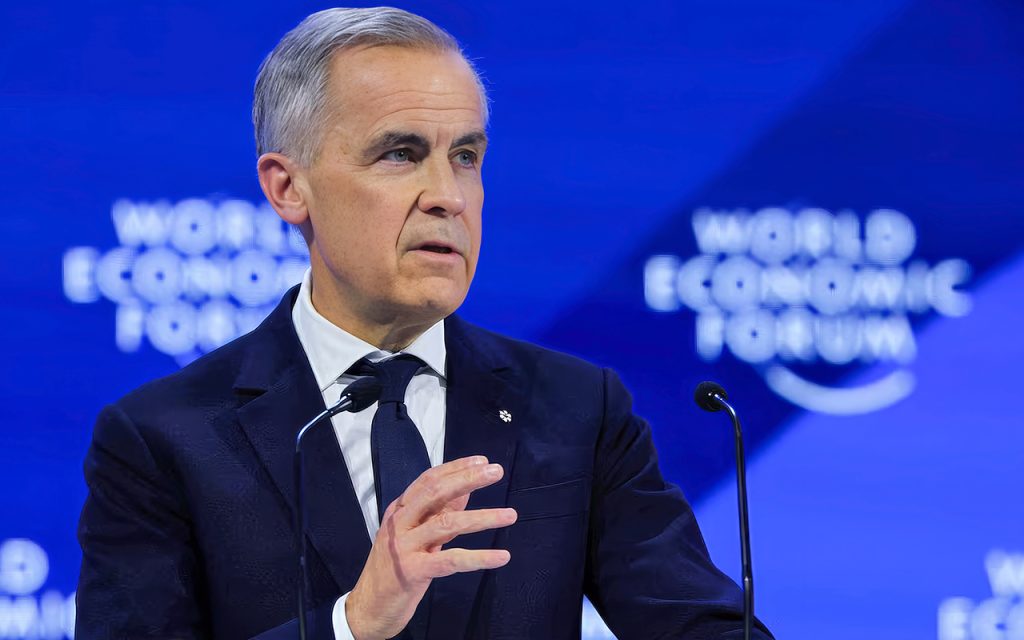
As Prime Minister of a middle power, Carney claims that Canada and similar medium powers have a choice: either to pretend that the international order remains in place and placate great powers through individual transactions, or to recognise reality and resist their pressure.
He argues that “middle powers must act together because ‘if you are not at the table, you are on the menu.’”
They should recognise the collapse of the international order, strengthen their own military power and economy, and build relationships with other medium powers for their mutual strength and advantage.
This means adhering to their fundamental values while also recognising their differing interests and self-understandings.
Carney illustrates his argument by describing how Canada is building its military strength, encouraging investment in its armaments industry and other industries, and forming new trade and security partnerships with the European Union and other similar medium powers.
In this, he argues, Canada is both principled and pragmatic: Principled in its commitment to fundamental values: sovereignty and territorial integrity, the prohibition of the use of force except when consistent with the U.N. Charter, and respect for human rights.
Pragmatic in recognising that progress is often incremental, that interests diverge, that not every partner shares our values.
“We are engaging broadly, strategically, with open eyes. We actively take on the world as it is, not wait for the world as we wish it to be.”
Carney’s approach is attractive. It avoids the fear that divides the world into friends and enemies and seeks shelter under a powerful nation.
It is also demanding, particularly in its commitment to the truth and to acting according to it, “applying the same standards to allies and rivals.”
In Carney’s judgment, “diversification internationally is not just economic prudence; it is the material foundation for honest foreign policy. Countries earn the right to principled stands by reducing their vulnerability to retaliation.”
Neither the
overwhelming arsenals
of the great powers
nor the allied strength
of medium powers
guarantees security
against the threat
posed by nuclear weapons.
Values and strength
Carney’s speech reflects his own background and experience. These lie in banking and finance, and are reflected in his pragmatic and technological vision of the world.
He is also, however, a reflective, culturally informed and self-critical banker concerned with values.
In his Reith Lectures he criticised the cultural shift towards identifying human value with financial value, and thus regarding human values such as fairness, equitable growth and addressing climate change as subordinate to wealth creation rather than shaping it.
His vision of a world in which medium powers such as Canada and Australia strengthen their individual economies and military power while building an interlocking network of relationships with other nations, however, is not only persuasive but also chilling.
It certainly offers hope in a dangerous world to middle nations that are too small to stand up alone to pressures from the giants.
It prevents them from becoming isolated and vulnerable forts within a barbaric world.
Even this interconnected world, however, builds a wall of exclusion around third-world nations.
These are left open to exploitation, invasion, impoverishment, exclusion and neglect by large and medium powers and their corporations.
In a world awash with arms and competition between nations, large and small, a focus on developing ever more destructive weaponry and military power in order to deter enemies is potentially disastrous.
Neither the overwhelming arsenals of the great powers nor the allied strength of medium powers guarantees security against the threat posed by nuclear weapons wielded by rogue nations, deranged individuals or forces united in resentment at enforced poverty and exploitation by the more powerful.
The path forward
When the inequality of nations and the resentment that it causes are allied to the capacity of nuclear and other weapons to destroy the human world, neither the hegemony of great powers nor the alliances of medium powers can guarantee long-term survival.
Nor is a self-centered and defensive focus on survival in a dangerous world likely to engender equal, peaceable and generous relations within medium nations themselves.
It is more likely to erode the values that have underpinned the linking of nations.
We need only think of the current poisonous attitudes to refugees and immigrants in the Western world.
In a world in which remoteness no longer guarantees security, and in which the capacity for massive destruction is so great, the values that shape decisions and actions are vital.
The survival of the world and the happiness of its inhabitants depend on recognising the unique value of each human being, regardless of nation, race or power; a commitment to respect in all relationships; and the recognition that human flourishing depends on attending to the needs of all in our world, not simply to the interests of individuals, their families, their wealth, their national identity or their race.
These were the values enshrined in the international institutions and laws that have now been set aside.
Carney’s aspiration no longer to “rely on just the strength of our values, but also on the value of our strength” is admirable.
The problem in practice is that, in our culture, reliance on the values of our strength all too often corrodes the strength of our values.
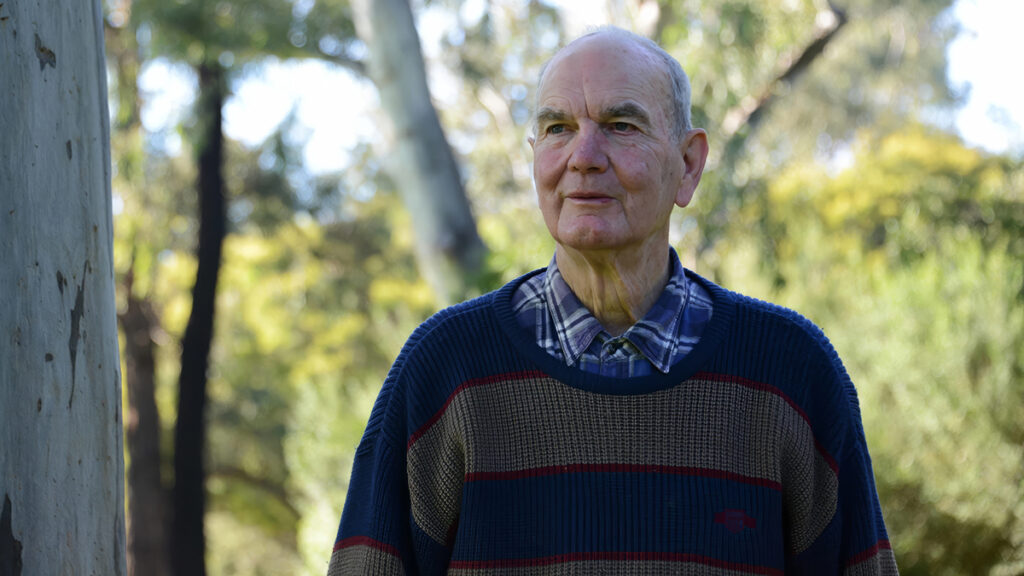
- Andrew Hamilton SJ is the consulting editor of Eureka Street and a writer at Jesuit Social Services. First published in Eureka Street, republished with permission of the author.