
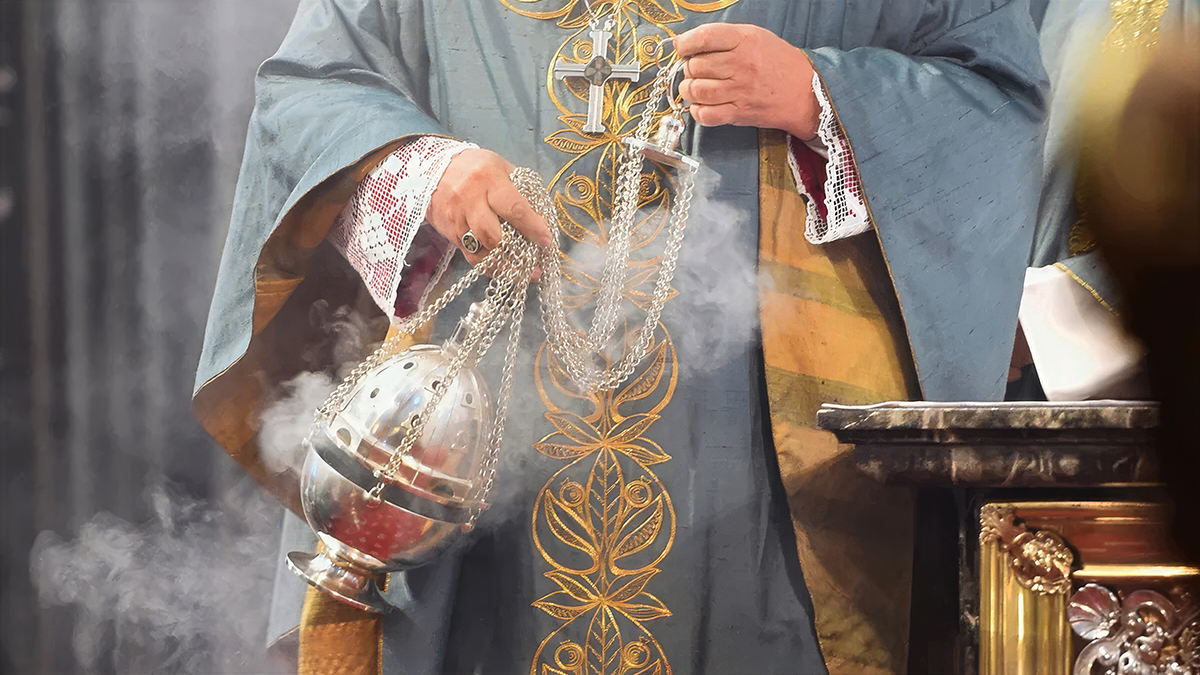

To the surprise of secularists, religion in its multiple While religion is resurging globally, the Western narrative shifted during the 1960s cultural revolution—and its aftershocks are still reshaping how we worship today.
Defining religion through transcendence
A functional definition of religion serves us well here: a body of beliefs encased in symbols, myths, and rituals that provide an ordered whole and ultimately give meaning to life. This meaning is found through transcendence—the sense of surpassing ordinary limits.
Thomas Luckmann captures this when he defines religion as “the capacity of the human organism to transcend its biological nature through the construction of objective, morally binding universes of meaning.” Simply put, religion is whatever provides felt, ultimate meaning in a world of threatening chaos.
The power of symbols and myth
Understanding transcendence requires understanding symbols. Symbols are as vital to the human spirit as water is to fish. Unlike signs, which speak directly to the intellect, symbols draw us beyond the observable to a higher experiential level of knowledge.
As Victor Turner writes, ritual symbols “celebrate or commemorate transcendent powers.” Their mysterious, non-rational quality defies neat logical analysis. This is precisely their power—they touch hearts and imaginations, evoking feelings that words alone cannot reach.
Myths work similarly as narrative symbols that articulate fundamental truths. As Rollo May observes: “The whole person speaks to us, not just to our brain.”
Through mythos, not logos, people relate to the sacred. Without myths,
people have no reason
to be or to act.
The 1960s religious revolution
The “expressive revolution” of the 1960s began among radicals reacting to modernity’s catastrophic failures—two world wars, the Holocaust, and the threat of atomic warfare. They condemned modernity as morally bankrupt and attacked the boundaries and certainties that had brought such devastation.
No institution remained unquestioned, including the Church. Mainline denominations suffered especially, ill-prepared to respond to the spiritual crisis. Young people felt these churches had either compromised with secular values or become so bureaucratic that they could no longer provide havens of meaning.
As they looked elsewhere, two distinct movements emerged:
- Collectivist Sects: Groups demanding total, communal commitment.
- Self-Help Individualism: A zeal for self-fulfillment where “truth” became a personal determination.
- Pentecostalism: A movement offering embodied, experiential worship emphasizing a direct encounter with the Holy Spirit.
From the 1960s to the Digital Age
In the following decades, these movements didn’t fade; they gathered strength. With the internet’s rapid spread in the 1990s, this expressive revolution was revitalized with global intensity. Digital connectivity did not create new spiritual hungers, but it amplified the binary reactions that emerged decades prior.
The patterns have become more extreme. On one side are nationalistic and fundamentalist groupings demanding tribal loyalty. On the other, self-help individualism flourishes. As Tara Isabella Burton observes, people now hunger for a spiritual identity that precisely reflects their personal values. Burton identifies a fundamental shift: we have moved the sacred from “out there” to “within,” placing God within the numinous force of our own desires.
Liturgical lessons
These global trends raise urgent questions regarding liturgical reform. Against the backdrop of humanity’s search for transcendence, we must ask: Has our focus on the Transcendent weakened? Has logos been emphasized to the detriment of mythos?
Consider Sacrosanctum Concilium, which emphasizes that rites must “be within the people’s powers of comprehension” and “not require much explanation.” Yet, this approach risks reducing rites to signs rather than symbols—making them immediately understood rather than mysteriously encountered.
If you comprehend
– St Augustine
it is not God.”
Anthropologists Mary Douglas and Victor Turner noted early on that reforms dominated by rational criteria leave little place for the power of mystery—the very thing the expressive revolution sought. Cardinal Ratzinger later reminded us that liturgy’s primary aim is the worship of the Transcendent God, not community bonding. When this is forgotten, liturgy becomes banal.
What thriving movements teach us
The explosive growth of Pentecostalism—now encompassing over 600 million believers—and the enduring power of popular Catholic piety offer vital lessons. Where people found story, song, and embodied gesture—through colorful devotions and Marian piety—faith flourished. Where excessive intellectualism replaced symbols with bare walls and rational explanations, the heart’s crave for mystery went unfulfilled.
The “secularization thesis” has failed. People are searching for encounters with the sacred that engage the whole self—heart, imagination, and spirit. As St. John Henry Newman reminds us: “The heart is commonly reached, not through reason, but through the imagination.”

- Gerald Arbuckle SM has Ph.D. in Social Anthropology from Cambridge University. A prolific writer and international speaker, in 2023, Arbuckle was awarded an honorary doctorate from Australian Catholic University.