

Do the faithful of Western and Eastern traditions know why they celebrate Easter on different dates?
Why should they care that the central Christian feast — the reason we believe the divine Word of God assumed human flesh — is not observed in unity of conviction and devotion?
A centuries-old division
The calculation of the date of Easter has long divided Christians. However, it was originally determined at the First Ecumenical Council of Nicaea in 325 AD, a council accepted by all churches across the confessional and ecumenical spectrum.
That council decreed that Easter should occur on the first Sunday after the first full moon on or after the vernal equinox according to the 45 BC Julian calendar.
Fifteen hundred years later, astronomical advances revealed a loss of 13 days in the Julian calendar, and Pope Gregory XIII instituted the Gregorian calendar in 1582, which is used by most of the world today.
Some Orthodox churches, however, retained the “old calendar”; other Orthodox churches accepted the Gregorian calendar, except in calculating the date of Easter so that Orthodox Christians worldwide would celebrate that season and day together.
The gap this year
Regrettably, while Eastern and Western Christians celebrated Easter on the same day in 2025, this year, in 2026, the celebration is one week apart. Next year, Western Christians will celebrate as early as March 28, while Eastern Christians will celebrate as late as May 2.
Nicaea at 1,700 years
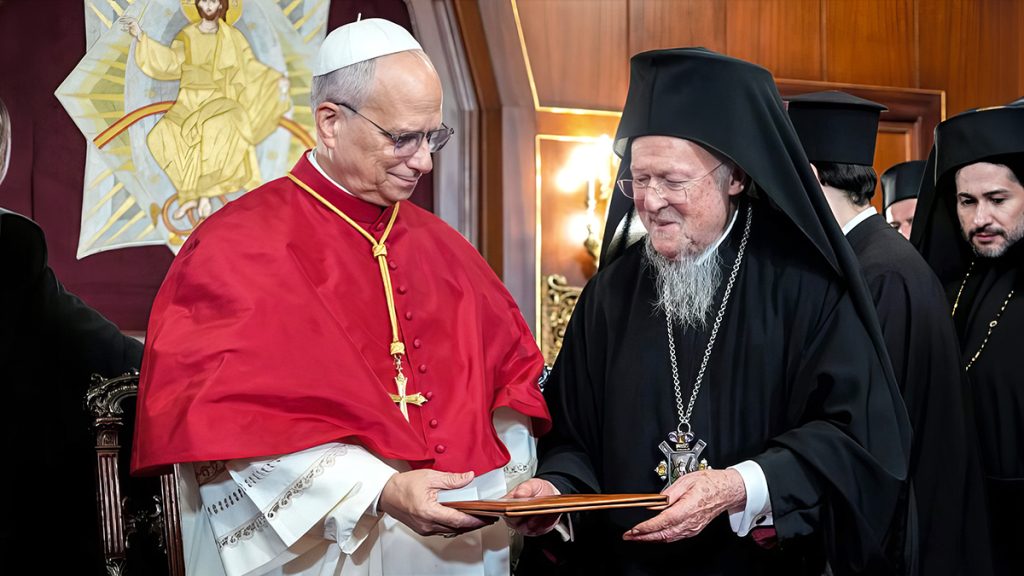
This disparity was addressed when the late Pope Francis and Ecumenical Patriarch Bartholomew agreed to meet last year to celebrate the 1700th anniversary of the First Ecumenical Council in the ancient city of Nicaea (modern İznik, Turkey).
Many Christians may not realize that all the Seven Ecumenical Councils of the first millennium that defined the Christian faith were held in what is now modern Turkey, not in Jerusalem or Rome.
Pope Leo XIV and Ecumenical Patriarch Bartholomew expressed a desire to celebrate Easter on a common day in a joint declaration issued on November 29, 2025.
Not rocket science
For decades, both East and West have discussed the priority and feasibility of a joint celebration. It’s not a matter of doctrinal creed; it doesn’t have to be debated or decided by a church council. And it’s not rocket science; it’s basic astronomy.
One theologian quipped: “To compute the date of Easter, don’t dive into manuscripts; just look up at the sky!”
A group of Orthodox scholars recently published a statement entitled “Toward a Common Date of Easter.”
Their objective was to address ecumenical and pastoral challenges faced by families in multicultural contexts, such as the United States of America and other Western societies. Christians of all confessions will benefit from reflecting on this statement.
Why should Christians — Eastern and Western — care? Because our Lord cared. On the Mount of Olives prior to his crucifixion, he expressed his passionate and painful desire that his “disciples may be one” (John 17.21).
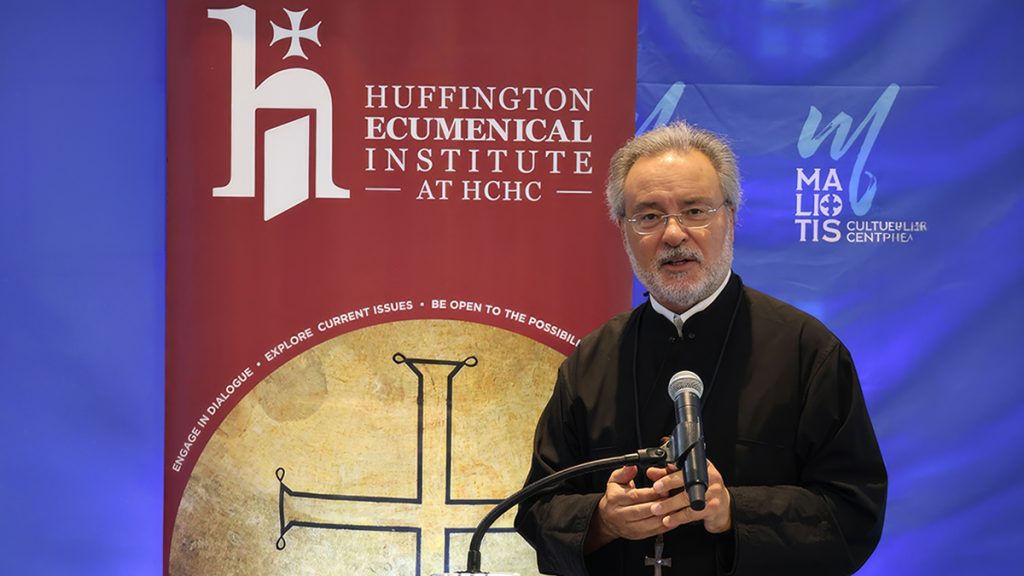
- Rev. Dr. John Chryssavgis is Archdeacon of the Ecumenical Patriarchate, Executive Director of the Huffington Ecumenical Institute in Boston, and Professor of Theology at Holy Cross School of Theology.
- This is ‘Flash’ version of “Toward a common date of Easter,” which first appeared in Orthodox Observer.