

For the first millennium, the pope was seen as the Vicar of Peter. But as papal power grew in the High Middle Ages, this title no longer sufficed. Pope Innocent III claimed instead to be the Vicar of Christ — a title rooted less in theology than in prestige.
Over time, this idolatrous language intensified. The Council of Trent’s catechism (1566) entrenched the sacralising of priesthood in printed doctrine, shaping Catholic teaching for four centuries. Thus emerged claims such as:
“They act in this world as the very person of God… their power… surpasses the very power of the angels.” (Link to source)
It is not difficult to understand the insidious grip of clericalism on the Church. Vatican II sought to challenge the priest-as-small-god mindset through its People of God ecclesiology. Yet the papacies of John Paul II and Benedict XVI rolled back the Council’s vision, ensuring that Tridentine clericalism remains alive and well.
Ontological change and priestly power
A major contributor to this mindset is the belief in an ‘ontological change’ at ordination. In the early Church, the Eucharistic presider acted on behalf of the worshipping community, with the Spirit’s presence as the source of sacramental authority. Over time, this power shifted — from the community to the individual priest.
The Year for Priests
In 2009, Benedict XVI instituted a Year for Priests. A Year of Sorrow and Contrition would have been more appropriate. His opening letter makes only an oblique reference to sexual abuse — not for the damage done to victims, but for the suffering of the Church:
“There are also, sad to say, situations which can never be sufficiently deplored where the Church herself suffers as a consequence of infidelity on the part of some of her ministers. Then it is the world which finds grounds for scandal and rejection.” (Link to source)
The exaltation of the priest
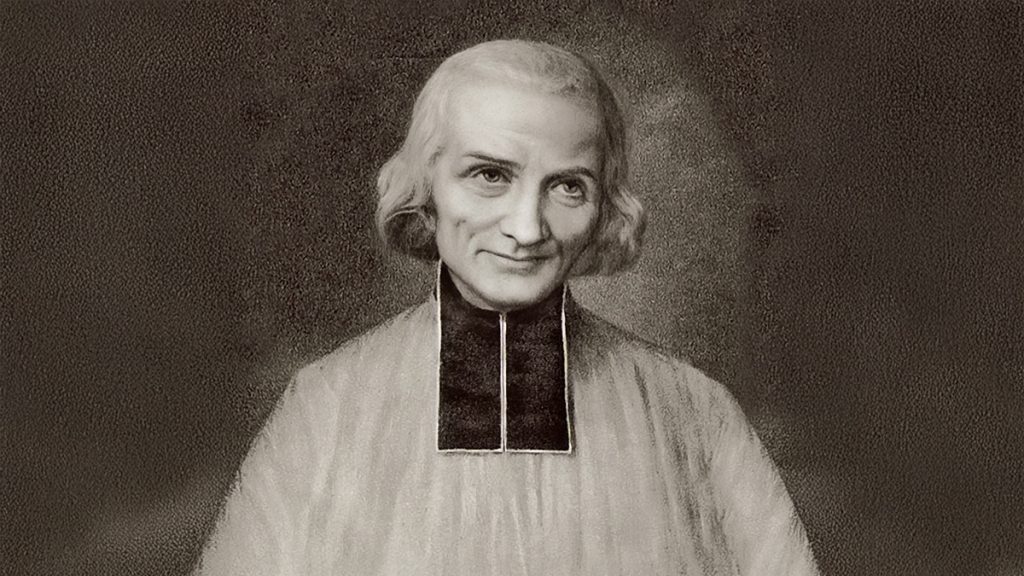
In the same letter, St John Vianney is quoted extensively:
“O, how great is the priest! … If he realized what he is, he would die… God obeys him: he utters a few words and the Lord descends from heaven at his voice, to be contained within a small host…
“Without the Sacrament of Holy Orders, we would not have the Lord. Who put him there in that tabernacle? The priest. Who welcomed your soul at the beginning of your life? The priest. Who feeds your soul and gives it strength for its journey? The priest. Who will prepare it to appear before God, bathing it one last time in the blood of Jesus Christ? The priest, always the priest. And if this soul should happen to die [as a result of sin], who will raise it up, who will restore its calm and peace? Again, the priest… After God, the priest is everything!”
A mindset unexamined
The inclusion of this quotation is startling. But it reveals how deeply clericalism is embedded within the Church — a mindset so unexamined that it cannot recognise how its pathology distorts the very nature of the Church.
- Angela Hanley studied theology as a mature student, graduating in 2010. In 2015 she completed a research MA on Catholic same-sex relationships. She is currently undertaking PhD studies. She has published many articles and two books, Whose a la Carte Menu?: Exploring Catholic Themes in Context and What happened to Fr Sean Fagan?