
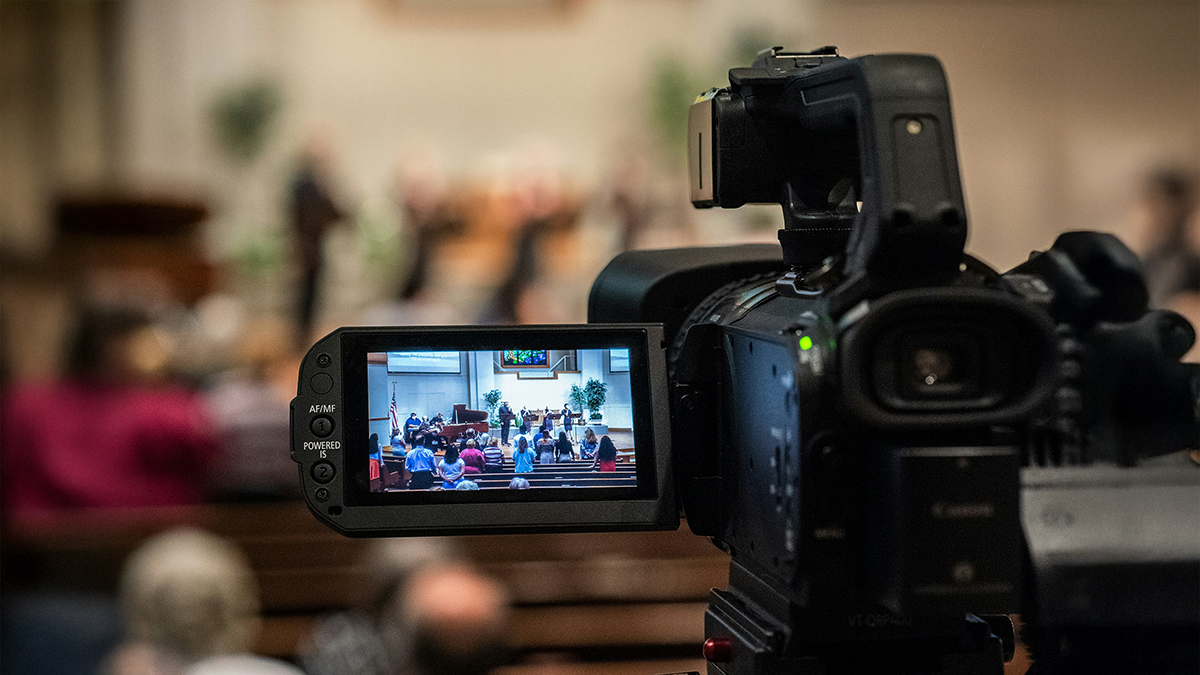
Social scientists have long shown that religious attendance can benefit people. Those who go to church, synagogue or mosque are generally healthier, happier and have better social support, according to peer-reviewed research.
But do those effects extend to online services? And how do they compare to in-person experiences?
A study of 43 Christian worshippers by Duke University researchers offers some indications.
The small study, published in the journal Psychology of Religion and Spirituality in July, suggests virtual church services are less effective on some individual measures than in-person worship.
The study, titled “The power of presence: Well-being and biopsychosocial effects of virtual versus in-person religious services,” asked volunteers in North Carolina to attend two Sunday church services — one in person and one online. They wore Fitbit trackers during both.
The Fitbits measured their heart rate and the number of calories burned. At the end of each service, participants wrote down their average metrics.
Emotional and spiritual connection
Volunteers also completed a questionnaire after each service.
They rated their agreement with statements such as, “I feel I have a lot in common with the people in my congregation,” and “During the service, I felt as if the service changed me in some way.”
The study found that online services resulted in lower self-reported experiences of transcendence, emotions, shared identity with the congregation and closeness with God, compared with in-person attendance. Well-being scores were similar for both types of services.
It also found that in-person attendees had a higher heart rate — 84 beats per minute, compared with 79 for online worshippers. Those in person also burned more calories, averaging 161 compared with 127 online.
“We’re not suggesting that virtual worship is bad, or that it doesn’t bring any benefits,” said Patty Van Cappellen, lead researcher and associate professor of psychology and neuroscience at Duke.
“What we’re showing is that it doesn’t replicate exactly the in-person experience. There are differences.”
Patters of attendance and pandemic effect
Online worship has grown since the COVID-19 pandemic, when most services went virtual. Even after in-person worship resumed, many congregations kept online services, some of which began before the pandemic.
A 2023-24 Pew Research Center study found that 23% of Americans watched religious services online or on TV at least once a month. Seventy-six percent watched online services a few times a year or less.
One-third said they attended religious services in person at least once a month. Sixty-seven percent said they went in person a few times a year or less.
Next steps for research
With online services here to stay, social scientists want to know more about how they compare with in-person worship. Van Cappellen said this study is a starting point for further research.
“In some follow-up work we want to study a little bit more the ways that people worship virtually to see if there are better ways to improve the experience of virtual worship,” she said.
For example, online services might benefit from adding a chat function where worshippers can greet each other. More camera angles could allow viewers to see fellow congregants, not just the leader.
“This study doesn’t give the final word on everyone’s experience with virtual versus in-person worship,” Van Cappellen said. “That’s something we want to do in future research, but it’s a start.”

- Yonat Shimron is a senior editor at RNS and a North Carolina-based reporter covering Judaism, the South’s changing religious landscape and the growing nonreligious divide.