
The significance and fragility of interreligious families — and the challenge of raising kids in multireligious and multicultural contexts, especially for Catholics — is again in focus.
A comment by JD Vance, Vice President of the United States, about his wife Usha’s faith and his wish that “eventually my wife comes to see it the same way” has triggered a global debate.
At a Turning Point USA event held at the University of Mississippi on 30 October, Vance confessed that he believes in the Christian Gospel and desires that his wife will do the same.
He explained that while they were planning to marry, they decided to respect each other’s religion but agreed to bring up their children as Catholics.
When belief meets politics
Vance’s comment on his wife’s faith generated a major discussion, online and in print. Many interpreted it politically, saying his views were insensitive or offensive.
Polemics and politics aside, the moment invites another look at Catholics marrying people of other faiths — and how couples navigate the difficult path of introducing faith-related symbols, rituals, and festivals to their children.
To be fair, the couple did go through a period of “how and when, if and but.” Vance himself embraced Catholicism later in life. Usha grew up in a religious household, where Hinduism shaped her parents’ sense of goodness and morality.
Vance said that Usha joins him on Sundays at church. Photos also show the couple, with their children, visiting temples together.
Forming faith with respect
In earlier interviews, Usha said that she is a Hindu, will remain so, and has no plans to become a Christian. Like many Hindus who have married Catholics and raised children in that faith, she may have imagined a life of both wrestling with and celebrating double belonging.
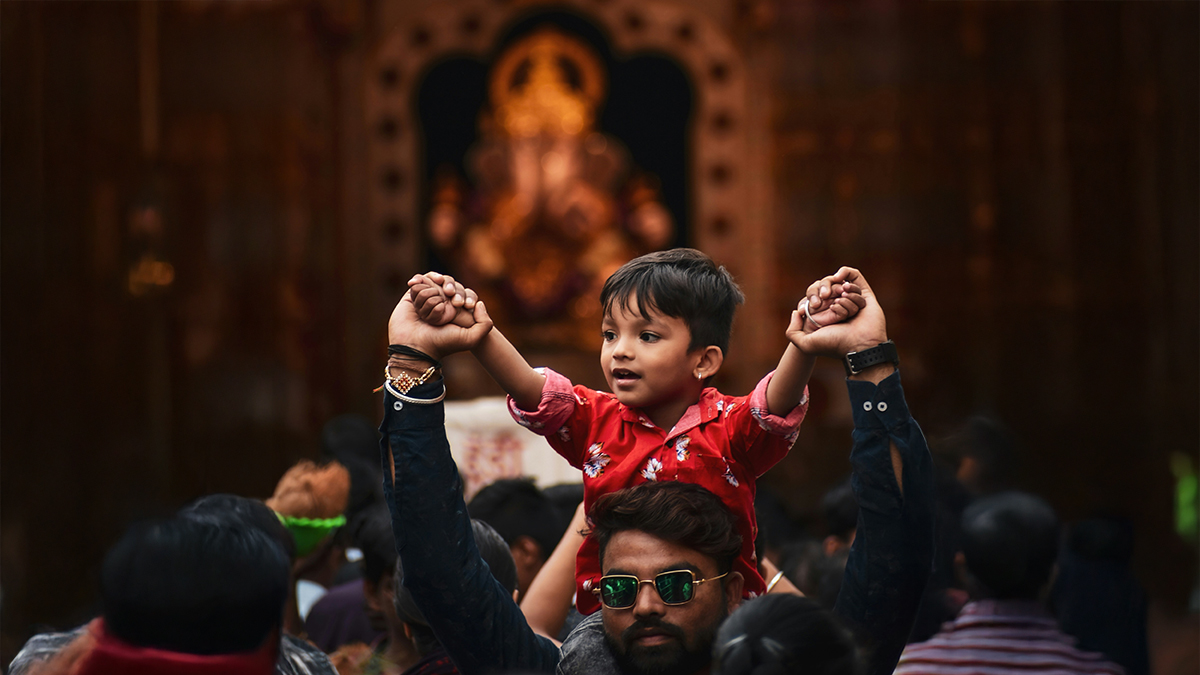
Children growing up in such contexts face multiple conflicts. In today’s world they live and learn alongside peers of many faiths. At home, they see rituals and festivals from more than one tradition — and cannot avoid being influenced by grandparents, teachers, and friends whose beliefs differ from theirs.
These children inevitably ask questions: “Can I perform this?” “Can I eat that?” “Can I receive a blessing from him?” Questions about God, gods and goddesses, purity and pollution, spirits and demons rarely have simple answers.
As they visit churches and temples, these children often cross boundaries with ease.
In an interreligious family, how are diverse religions introduced to Catholic children? Nostra Aetate reminded us not to reject what is “true and holy” in other religious traditions.
It is time to form children to respect and appreciate other religions, knowing that all faiths are in need of purification.
One can have deep faith in Christianity while also holding profound appreciation for what is good in other religions.
- Stanislaus Alla SJ holds a doctorate from Boston College, USA. He is an internationally published writer with interests in ethical concerns. He currently teaches at Vidyajyoti College of Theology, Delhi.